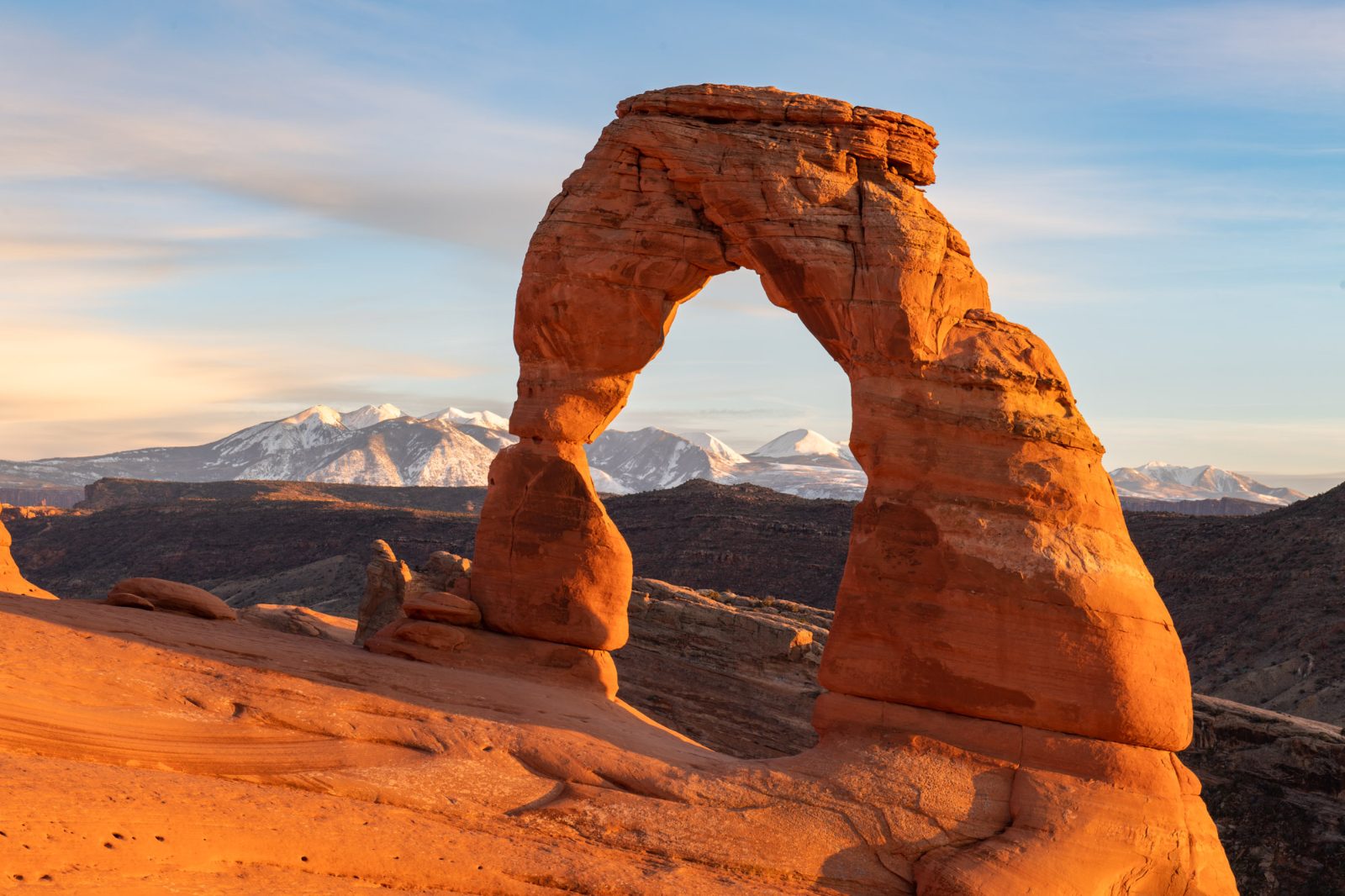
Delicate Arch
Golden hour before sunset
Position yourself on the rock ledge opposite the arch to capture the sandstone glowing against the La Sal Mountains.

Arches National Park transforms at sunset, when horizontal light ignites the Entrada sandstone into shades of copper, rust, and amber. This guide maps the viewpoints that deliver the best compositions, explains the timing that separates a snapshot from a frame-worthy shot, and walks you through the access considerations that matter when daylight is finite.
Quick answer
The premier arches national park sunset spots include Delicate Arch viewpoint, the Windows section pullout, Balanced Rock's east face, and the Garden of Eden overlook. Arrive between 15:00 and 19:00 to secure parking and position yourself before golden hour. Sunset times shift with the season—summer pushes past 20:00, winter settles near 17:00—but the ideal light begins roughly ninety minutes before the sun drops behind the La Sal Mountains.
The park holds more than two thousand natural stone arches, but only a handful offer unobstructed western exposures paired with foreground interest and safe vantage points. Delicate Arch draws the largest crowd for good reason: the freestanding span frames the declining sun perfectly from the lower viewpoint, accessible via a short walk from the Wolfe Ranch trailhead. Photographers willing to hike the full 1.5 miles to the arch base gain a different angle, but the lower viewpoint delivers the composition most recognize. The Windows section—a cluster that includes North Window, South Window, and Turret Arch—sits just two hundred yards from the parking area and provides multiple setups within a compact zone. South Window acts as a natural frame for Turret Arch when shooting east, while the reverse angle captures the Windows silhouetted against a western sky. Balanced Rock, visible from the main park road, glows intensely when backlit, and the pullout on its eastern flank allows tripod work without hiking. The Garden of Eden viewpoint, a paved pullout between the Windows and Panorama Point, surveys a wide field of fins and spires with the La Sal range in the distance—a reliable fallback when the named formations are crowded. Light quality peaks in the hour before the sun contacts the horizon, a window photographers call golden hour. The Entrada sandstone contains iron oxide, and low-angle light amplifies the red spectrum, transforming beige rock into saturated warm tones. Cloud cover determines whether the effect is dramatic or muted; clear skies yield clean gradients, while scattered clouds add texture and sometimes post-sunset alpenglow. The park remains open twenty-four hours, so lingering past official sunset is permitted and often rewarded—the best color sometimes appears ten to fifteen minutes after the sun has set, when indirect light saturates the sky. Parking at Delicate Arch and the Windows fills rapidly between April and October, particularly on weekends. The park advises securing a spot no later than two hours before sunset during peak visitation. Alternate sunset photography locations along the park's scenic drive—Courthouse Towers viewpoint, Petrified Dunes, and the pullout near Fiery Furnace—receive less attention but still capture the evening palette. Weather shifts quickly; check the forecast and bring layers even in summer, as post-sunset temperatures drop fifteen to twenty degrees within an hour once the sun is gone.
“The best color sometimes appears ten to fifteen minutes after the sun has set, when indirect light saturates the sky.”
Golden hour before sunset
Position yourself on the rock ledge opposite the arch to capture the sandstone glowing against the La Sal Mountains.
One hour before sunset
Shoot through North Window to frame Turret Arch in the distance as the light hits the rock faces.
At sunset
Walk the short loop trail for a 360-degree view that highlights the silhouette of the formation against the sky.
At sunset
Capture the underside of the two massive spans as reflected light fills the alcove during the final minutes of daylight.
This plan suits visitors arriving mid-afternoon and staying through sunset, covering approximately four to five hours in the park. It moves from accessible foreground arches to elevated overlooks, finishing at the park's signature sunset viewpoint.
Stop at the visitor center to pick up a map and check current sunset time. Drive the scenic road toward the Windows section, approximately 9 miles from the entrance.
Walk the easy one-mile loop past North and South Window arches and Turret Arch. The short detour to Double Arch adds another quarter-mile.
Photograph this iconic formation from the paved path, a quick ten-minute visit. The late afternoon light begins to warm the sandstone.
Drive to the lower viewpoint if you prefer a short walk, or begin the 1.5-mile trail to the arch itself for closer access. The trail takes roughly 45 minutes each way and involves exposed slickrock.
Arrive at the arch or upper viewpoint as the sun drops toward the La Sal Mountains. The arch glows deep orange in the final thirty minutes before sunset.
Exit slowly along the main park road, watching for wildlife and enjoying the alpenglow on surrounding fins and towers.
Arches National Park is open daily throughout the year to accommodate visitors planning to view sunset spots.
Arches National Park is located near Moab, Utah. Access to the park and its sunset viewpoints is primarily achieved by private vehicle via the entrance on U.S. Route 191.
U.S. Route 191 North from Moab
U.S. Route 191 South from I-70
To secure parking and access desired viewpoints, plan to enter the park within the best arrival window of 15:00–19:00. Arriving during this period helps manage the transit time from the main gate to your chosen sunset location.
The desert crust beneath your feet at Arches took decades to form and can be destroyed in seconds. Sunset crowds intensify the pressure on fragile cryptobiotic soil and sandstone formations.
Everything you need to know about arches national park sunset spots
The most popular vantage points for golden light include Delicate Arch, The Windows Section, and Landscape Arch. Each of these arches national park sunset spots offers unique compositions for capturing the glowing red sandstone. Photographers often prefer locations where the sun illuminates the rock formations directly from the west.
Entry requirements change seasonally, so check the official park website before your trip. A standard entrance fee of 30 USD is required for each private vehicle. Please review current access policies to ensure you have the necessary entry documentation for your chosen arches national park sunset spots.
To avoid peak crowds and extreme heat, the best arrival window is 15:00–19:00. Arriving within this timeframe ensures you have enough time to reach your chosen observation deck or trailhead before the light fades. This planning helps you secure parking at popular photography spots.
Many of the most famous viewing areas are accessible via the main park road, though some require a hike. You can reach trailheads for major evening landmarks by personal vehicle. Detailed maps and current road status are available on the official site.
Bring plenty of water, a headlamp for the return hike, and appropriate footwear for uneven desert terrain. While capturing images at various sunset lookouts, remember that the temperature drops quickly after dark. Pack layers to remain comfortable throughout your evening session.
While you can explore the park independently, local operators offer guided outings that provide insights into the geology of these landmarks. Exploring via a guided experience can help you navigate the landscape efficiently to reach the best viewpoints. These tours are managed by private vendors separate from park operations.
Visitors must stay on designated trails to protect the delicate biological soil crust and rock surfaces. Observe all signage regarding off-trail travel and noise levels to maintain the park environment. Respecting these guidelines preserves the area for all who come to enjoy these arches national park sunset spots.