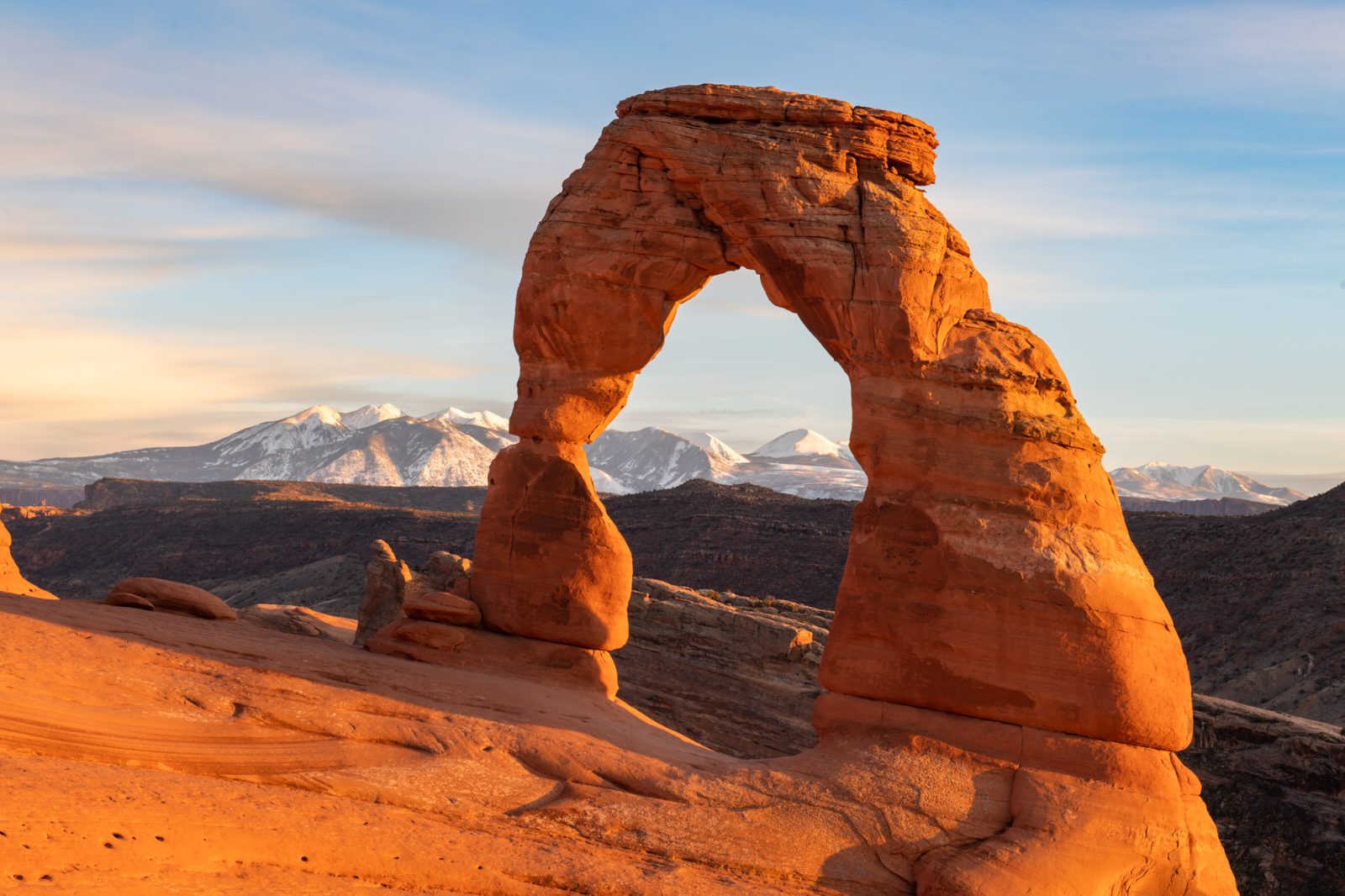
Delicate Arch
Golden hour and sunset
The arch frames the La Sal Mountains, requiring a hike to reach the basin for a wide-angle perspective.

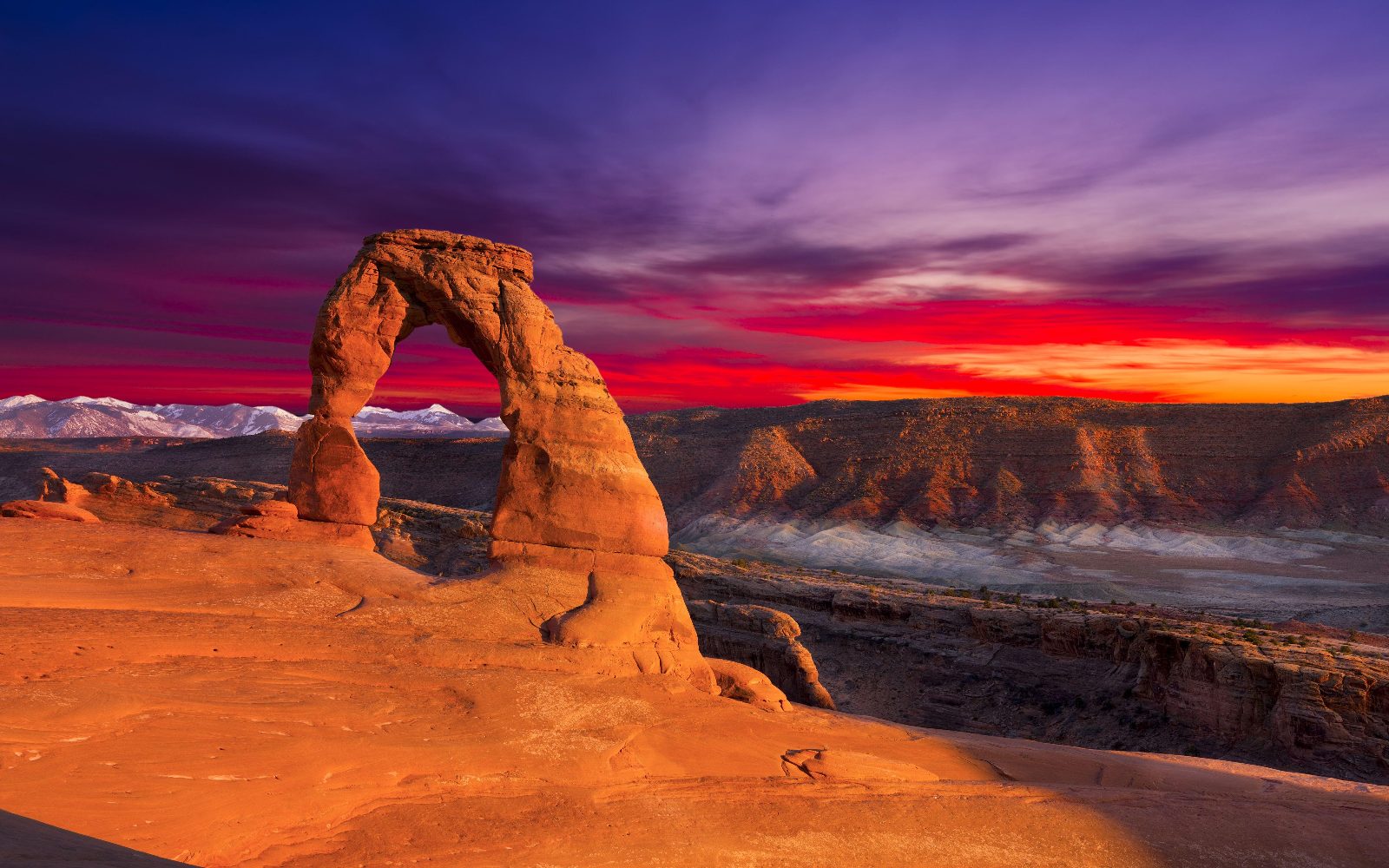
The sun sets behind the La Sal Mountains east of Arches National Park, casting sandstone formations in gold and red light that changes by the minute. Sunset time shifts more than three hours across the year, from mid-afternoon in winter to nearly 9 PM in summer. Knowing the exact time for your travel dates helps you position yourself at viewpoints before the light peaks.
Quick answer
Sunset at Arches National Park ranges from approximately 5:15 PM in late December to 8:45 PM in late June. The park sits in the Mountain Time Zone without observing daylight saving adjustments after November. Spring and fall bring moderate sunset times between 6:30 PM and 7:45 PM, while summer offers the longest evening light for photography and exploration.
Arches National Park sits at 4,085 feet elevation on the Colorado Plateau, where the horizon is defined by the La Sal Mountains to the southeast and open desert to the west. The sun drops behind distant peaks rather than a flat horizon, shortening visible twilight by several minutes compared to coastal locations. This compression matters when planning evening hikes—civil twilight, the window of usable natural light after sunset, lasts only 25 to 35 minutes depending on season. The arches national park sunset time shifts predictably with Earth's axial tilt. In December and January, the sun sets before 5:30 PM, leaving little margin for visitors who enter the park mid-afternoon. By March, sunset pushes past 7 PM as daylight saving begins. June brings the year's latest sunsets near 8:45 PM, offering extended golden hour for photography at Delicate Arch, Turret Arch, and the Windows Section. September through October delivers a second ideal window, with sunsets between 7 PM and 7:45 PM and cooler temperatures that make the hike to elevated viewpoints more comfortable. The park's red Entrada Sandstone and Navajo Sandstone formations reflect warm light most intensely in the 30 minutes before and after sunset. Photographers target this interval, but it also draws the largest crowds to trailhead parking areas. Delicate Arch, the park's most photographed formation, faces west and glows brightest in direct evening light. The 3-mile round-trip hike to its base requires 90 minutes to two hours, meaning a 6 PM departure for an 8 PM summer sunset. Winter sunset times compress this margin; a 5:15 PM sunset demands a 3 PM trailhead start to reach the arch with adequate light. Evening entry helps avoid midday heat and traffic congestion. The park permits 24-hour access with a valid entrance pass, and arriving after 3 PM typically means open parking at major viewpoints. Balanced Rock, Park Avenue, and the Windows can be photographed from roadside pullouts, requiring no hiking but offering dramatic silhouettes as the sun drops. Courthouse Towers and the Fiery Furnace take on deep shadow contrast in the final minutes of daylight, a different but equally compelling subject for wide-angle compositions.
“Civil twilight lasts only 25 to 35 minutes after sunset at Arches, leaving little margin for evening hikes.”
The best window for sunset viewing occurs during the shoulder seasons of spring and fall, when daylight hours are moderate and temperatures remain comfortable for evening excursions. Arriving at a viewpoint at least 60 minutes before the sun dips below the horizon ensures optimal light conditions.
Mild to warm, 60°F–80°F
Days lengthen, offering pleasant evenings for trail navigation. Clear skies are common during these months.
Hot, 90°F–105°F
Sunsets occur late in the evening. Heat persists well into the night hours.
Cool to mild, 50°F–75°F
Sunsets shift earlier, providing comfortable lighting conditions. This is the preferred window for landscape photography.
Cold, 30°F–50°F
Shortest days lead to early sunsets. Skies are often crisp, though evening temperatures drop rapidly.
Verdict: For the most balanced experience, aim for Tuesday to Thursday in April or October to benefit from milder temperatures and manageable crowd levels.
Golden hour and sunset
The arch frames the La Sal Mountains, requiring a hike to reach the basin for a wide-angle perspective.
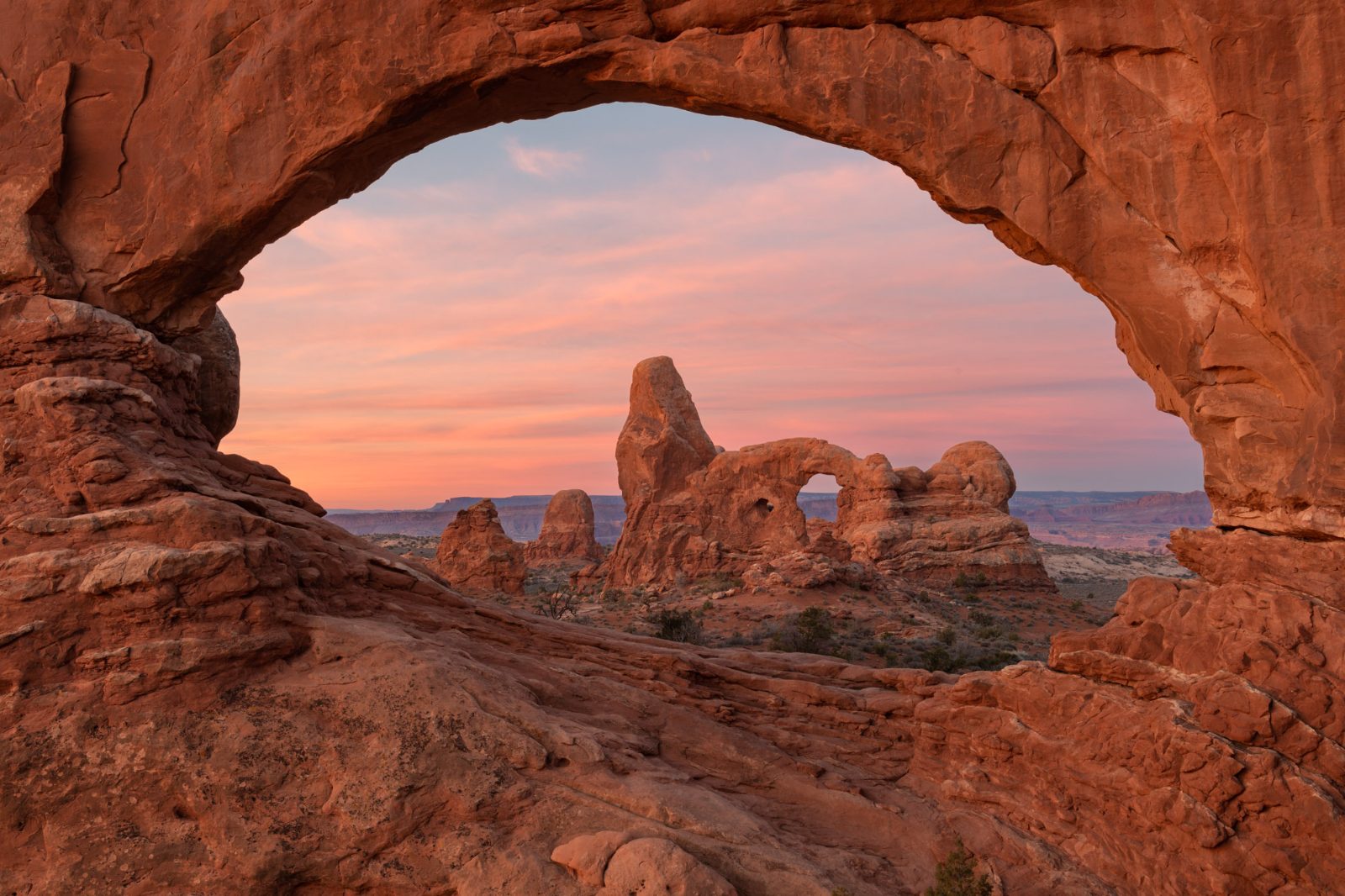
Sunset
These large arches offer clear views of the western horizon and vibrant rock color shifts.
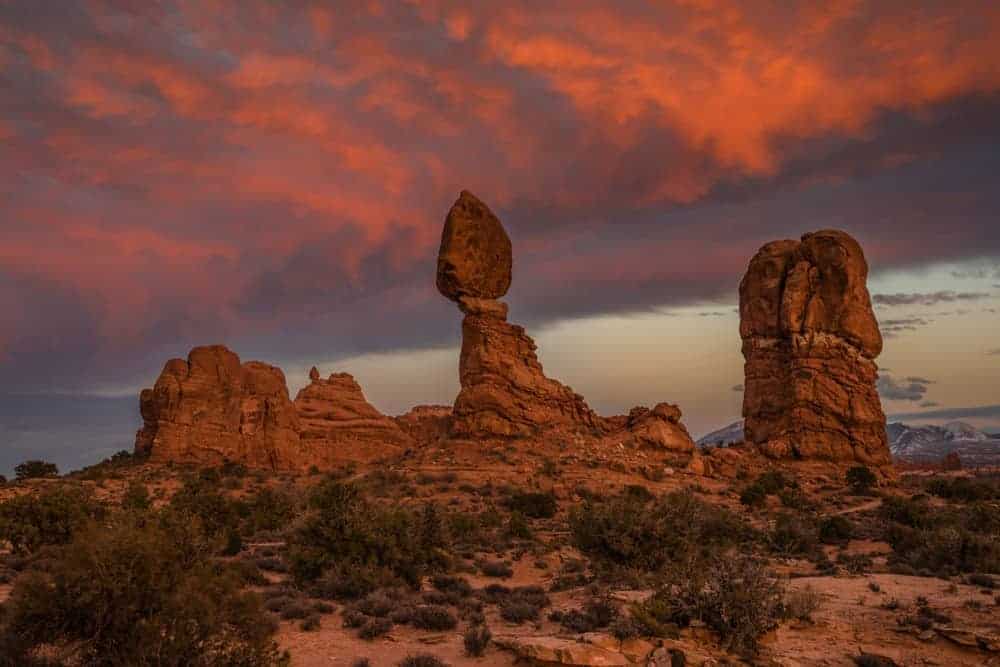
Sunset
This formation provides a high vantage point for capturing the changing sky colors behind the rock.
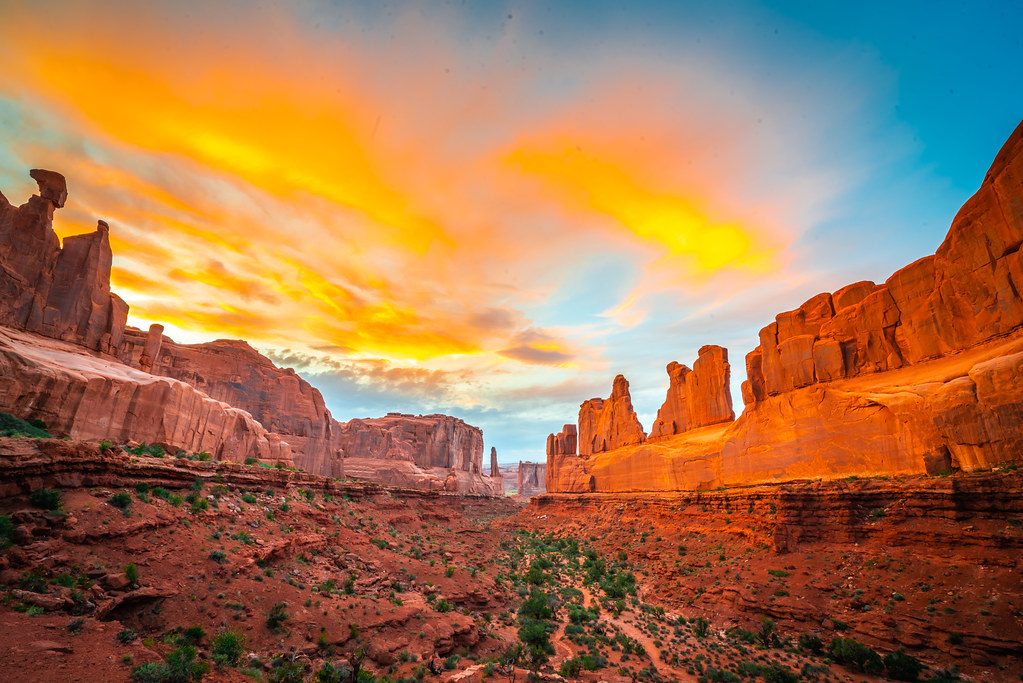
Late afternoon to sunset
This viewpoint features towering monoliths that catch the last light of the day.
Arches National Park remains open 24 hours a day, seven days a week, allowing visitors to access the park for sunset viewing and evening activities.
Arches National Park is located five miles north of Moab, Utah, via U.S. Route 191. The primary and only access point for vehicles is the park entrance road located off this highway.
U.S. Route 191 North from Moab
Local Moab shuttle services
To ensure you reach your viewing location before sunset, the best arrival window is 00:00–23:59. Entering before 08:00 or after 15:00 helps avoid traffic congestion and limited parking.
Everything you need to know about arches national park sunset time
Travelers can check official weather resources or astronomical charts to find the accurate daily sunset schedule. Planning ahead ensures you have enough time to reach popular geological formations before the golden hour begins.
No, the timing of dusk changes daily based on the season and the Earth's orbit. Visitors should research the specific arches national park sunset time for the exact date of their planned excursion.
Yes, the park is accessible 24 hours a day, seven days a week. You may remain in the park to observe the evening illumination of the desert landscape after the sun dips below the horizon.
Since many visitors arrive to watch the day transition to night, parking areas near popular trailheads can become congested. Arriving before 08:00 or after 15:00 is recommended to help avoid heavy traffic flow when seeking the perfect arches national park sunset time.
Visitors are advised to prepare for rapid temperature changes as the light fades over the red rocks. Carrying a flashlight or headlamp is prudent if you plan to hike back to your vehicle after the natural light has diminished.
The standard entrance fee is 30 USD per private vehicle. This pass is valid for 7 days, allowing you to return to view the sunset across multiple days of your trip.